Industrial ventilation renews the air in a building to remove heat, humidity, dust and fumes, and to keep working conditions safe. At Atosdin we manufacture roof-mounted ventilation systems for industrial buildings (static ventilators, extractor fans and mixed systems), and we size each project according to the volume and activity of the building. Made in-house, free technical study and worldwide shipping (free in mainland Spain).
✓ Free technical study · ✓ Free shipping in mainland Spain · ✓ We ship worldwide
Which industrial ventilation system does your building need?
The choice depends on how much heat or pollution the activity generates and on whether you want to avoid electricity consumption.
| System | How it works | Power consumption | When to use it |
|---|---|---|---|
| Static | Hot air rises and exits through the roof (natural draught), helped by the wind | None | Warehouses and buildings with moderate heat and little pollution |
| Dynamic | Motorised extractor fans force the air out at a controlled airflow | Yes | Fumes, dust, intense heat sources or demanding airflows |
| Mixed | Works in static mode most of the year and switches on extraction when needed | Only at peaks | Buildings with variable needs that want to save energy |
Our industrial ventilation range
We manufacture units from 230 to 46,500 m³/h each, so a building is ventilated by combining several units spread across the roof.
| Family | Models | Airflow per unit | Sound level |
|---|---|---|---|
| Static unit (ventilator without motor) | II, III, VI, VIII | 230 to 3,100 m³/h | No motor |
| Dynamic unit | 330 to 800-M | 2,400 to 40,500 m³/h | 54 to 84 dB(A) |
| Static-dynamic mixed unit | M-III to M-IX | 2,400 to 29,700 m³/h | 54 to 78 dB(A) |
| Dynamic unit with external motor (anti-corrosion) | 450-T to 800-T/M | 6,300 to 40,500 m³/h | 69 to 88 dB(A) |
| ATEX dynamic unit (explosive atmospheres) | 350/AT to 900-6T-3/AT | 3,100 to 41,850 m³/h | 59 to 89 dB(A) |
| Dynamic unit 400 ºC / 2 h (smoke extraction) | 400 to 900 | 3,500 to 46,500 m³/h (with two speeds, half at low speed) | 53 to 89 dB(A) |
| Louvre and flap smoke vents | Various sizes | Aerodynamic area from 0.46 to 4.57 m² | No motor (opening by fusible link, electric or pneumatic) |
The «L» models are lower-speed, quieter versions; the «M» models offer higher airflow. The external-motor version is designed for corrosive environments, and the 400 ºC / 2 h version for removing smoke and heat in the event of fire. ATEX units have motors certified for explosive atmospheres (Ex e, Ex d and dust categories), and the louvre and flap smoke vents are marked according to UNE-EN 12101-2:2013.
How to calculate the ventilation of an industrial building
The airflow a building needs is calculated by multiplying its volume by the air changes per hour required by its activity:
Airflow (m³/h) = building volume (m³) × air changes per hour
As a rough guide, a large building with little activity, such as a warehouse, may need about 4 air changes per hour, and a small building with a very stuffy atmosphere about 10. Heat sources, fumes and the number of workers can raise that figure.
Example: a 40 × 25 m building, 8 m high, has 8,000 m³. At 6 air changes per hour it needs 48,000 m³/h. In addition, Spanish law sets a minimum of fresh air per worker (see regulations), which in large buildings is usually below the airflow calculated by volume.
These figures are only a guide. Our technical office calculates the exact airflow for your building free of charge.
Workplace ventilation regulations (Spain)
Spanish Royal Decree 486/1997 sets the minimum environmental conditions for workplaces (Annex III):
| Requirement | Value |
|---|---|
| Temperature, sedentary work | 17 to 27 ºC |
| Temperature, light work | 14 to 25 ºC |
| Relative humidity | 30 to 70 % (minimum 50 % where there is to risk of static electricity) |
| Maximum air speed | 0.25 m/s in non-hot environments; 0.5 m/s sedentary and 0.75 m/s non-sedentary in hot environments |
| Minimum air renewal | 30 m³/h per worker (sedentary work, environment neither hot nor polluted); 50 m³/h in all other cases |
The same decree requires ventilation installations to be kept in good working order. If the building has explosive atmospheres or thermal installations, there are additional requirements (for ATEX zones we manufacture dynamic units with certified motors). Our technical office will advise you on the requirements that apply in your country.
Industrial ventilation ATOSDIN S.L.
The importance of industrial ventilation
The main reason for having proper industrial ventilation is that it allows people to work safely and productively. In other words, it provides greater safety and health for workers, reducing occupational risks and the sick leave they usually lead to.
It also offers other important advantages. Working in a properly ventilated environment greatly improves employee comfort, which has a direct impact on performance and increases productivity. Good ventilation also helps reduce respiratory illnesses, minimising absences due to health problems. And there is the peace of mind of having everything in order, complying with safety regulations and avoiding possible penalties, which also improves the company’s image among its employees and customers.
Industrial ventilation for well-being
Industrial ventilation affects not only the well-being of workers but also the durability and performance of machinery. An environment with proper air-quality control reduces the build-up of dust, particles and pollutants that can affect equipment performance. This means fewer maintenance stoppages and greater operational efficiency. Proper ventilation also helps control the temperature in enclosed spaces, which is key to maintaining optimal conditions in industrial sectors sensitive to heat or humidity.


How we work
Free technical study
Made in-house
Shipping
Installation
Certificates
Industrial ventilation by sector
- Storage and logistics buildings: large volumes with a low pollutant load; static roof ventilation is usually enough to remove the heat that builds up under the roof in summer.
- Manufacturing buildings and industrial plants: machinery, furnaces or welding generate heat and fumes; dynamic or mixed systems are usually the best option here.
- Specialised industrial buildings: processes with dust, humidity or special atmospheres that require a tailored study.
- Engineering firms and contractors: we provide technical data and certificates so ventilation can be included in the project from the start.
Completed projects

Natural ventilation of a logistics warehouse in Zaragoza
Logistics: static roof ventilation with no electricity consumption.

Ventilation of a foundry building with dynamic extraction
Manufacturing: dynamic extraction to remove heat and fumes.

Maintenance
A static system needs hardly any maintenance: just check periodically that the outlets are not blocked and that the roof is in good condition. The extractor fans in dynamic and mixed systems need the motor and impellers checked and cleaned. Spare parts are available for our equipment.
Industrial ventilation FAQ
What is industrial ventilation and what is it for?
It is the set of systems that renew the air in an industrial building or plant. It removes heat, humidity, dust and fumes, protects the health of workers and machinery, and ensures compliance with workplace regulations.
What is the difference between static, dynamic and mixed ventilation?
How many air changes per hour does an industrial building need?
It depends on the activity. As a guide, a large warehouse with little activity needs around 4 air changes per hour, and a building with a very stuffy atmosphere may need 10 or more. The exact figure comes from the technical study of each building.
How is the ventilation airflow of a building calculated?
Multiply the volume of the building (length × width × height) by the air changes per hour required. For example, 8,000 m³ at 6 air changes per hour gives 48,000 m³/h. Then check that the legal minimum per worker is met. Our technical office will do the exact calculation for you free of charge.
What do the regulations say about workplace ventilation?
In Spain, Royal Decree 486/1997 requires a minimum of 30 m³/h of fresh air per worker for sedentary work in an environment that is neither hot nor polluted, and 50 m³/h in all other cases. It also sets temperature ranges (17 to 27 ºC for sedentary work) and humidity ranges (30 to 70 %). Other countries have their own rules; our technical office can help you apply them.
Does static ventilation work when there is no wind?
Yes. Hot air tends to rise and leaves through the roof by natural draught; wind increases extraction but is not essential. According to our technical data sheets, each static unit ventilator removes from 230 m³/h (model II) to 3,100 m³/h (model VIII). The actual airflow depends on the height of the building, the temperature difference and the wind: ask our technicians and they will calculate it for your case.
How can you reduce the temperature of an industrial building in summer?
By removing the very hot air that builds up under the roof: this lowers the indoor temperature and improves comfort, especially when combined with fresh-air inlets at the bottom of the building. Ventilation does not cool below the outdoor temperature, but extracting at night as well helps the building start the day cooler.
When is mixed ventilation worthwhile?
When you want to reduce energy consumption. For most of the year the system works in static mode, with no consumption, and dynamic support is kept for when more extraction is needed.
Can it be installed in an existing building?
Yes, roof-mounted systems can be fitted to existing buildings. Our equipment suits almost every type of roof; smoke vents, for example, have an integrated upstand and can be installed directly or on a base. Tell us about your roof and we will confirm the solution.
What are the benefits of good industrial ventilation?
It reduces occupational risks, improves comfort and productivity, limits the dust that damages machinery, controls temperature and makes it easier to comply with regulations.
Does Atosdin install the equipment and provide certificates?
It depends on the order: we usually put you in touch with specialist installers in your area, and one of our technicians will tell you which option suits your case. Equipment certificates are provided on request.
How do I request a quote and what information do you need?
We do not publish prices because each system depends on the building. For the free study we need: dimensions (length, width and height), roof type, activity carried out, number of workers, heat or fume sources, and location. You can send them using the form on this page or from our contact page.
What is a static roof ventilator for industrial buildings?
It is a unit installed on the roof that lets hot air escape from the building by natural draught, with no motor and no electricity consumption. It is the basis of static industrial ventilation. At Atosdin it is the static unit, available in four sizes (models II, III, VI and VIII) from 230 to 3,100 m³/h per unit.
What is the difference between a ventilator and a smoke vent?
A ventilator provides continuous ventilation. A smoke vent is a roof opening designed to remove smoke and heat in the event of fire; Atosdin smoke vents are marked according to UNE-EN 12101-2 and can include a daily ventilation system, so they can also be used for ventilation. Find out more on our smoke vents page.
Which system is best for extracting welding fumes or dust?
With welding, oxy-cutting or plasma fumes, or with airborne dust, dynamic or mixed roof extraction is recommended, as it ensures a constant airflow even when there is no temperature difference. If fumes always come from fixed workstations, general extraction complements capture at the workstation itself. If there is a risk of explosive atmospheres, for example with combustible dust, ATEX units are used.
How many extractor fans or ventilators does my building need?
It depends on the volume, not just the floor area: height and activity make a big difference. For example, a 600 m² building that is 7 m high has 4,200 m³; at 6 air changes per hour it needs about 25,200 m³/h, spread across several units on the roof. Send us the length, width, height and activity and we will tell you how many units and which model.
Which equipment withstands corrosive or coastal environments?
Units can be ordered in stainless steel, and for corrosive environments we also offer the dynamic unit with external motor. Smoke vents are also available in stainless steel. Ask our technicians which option suits your case.
Can the extractor fans start automatically according to temperature?
Yes, dynamic and mixed units can be fitted with a thermostat, depending on the model. Ask our technicians which control option the unit you need has.
Do you ship outside Spain?
Yes, we ship anywhere in the world. Shipping is free in mainland Spain. For the Balearic and Canary Islands and destinations outside mainland Spain, ask one of our technicians and we will include the conditions in your quote.
Do you supply spare parts and can you visit the building?
Yes. We supply spare parts for our equipment: have the model or a photo of the rating plate to hand and we will tell you which one you need. We can also visit the building to study the solution.
Does the quote commit me to anything?
The conditions of each quote depend on the order. If you have any questions about what it includes, ask one of our technicians before you decide.
Our technical office is at your service to provide the technical and financial study for your project.
✓ Free technical study · ✓ Free shipping in mainland Spain · ✓ We ship worldwide
 📍 View on Google Maps
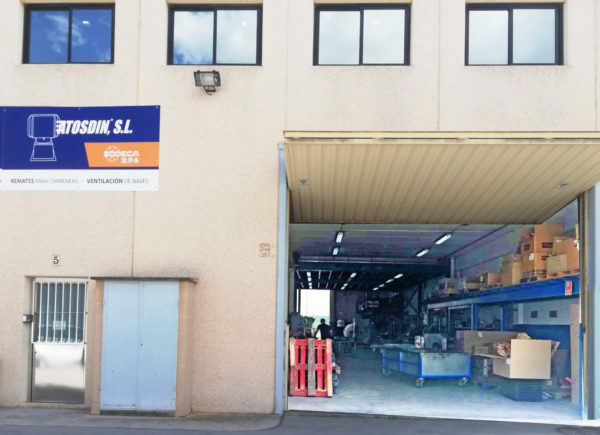
Our factory
Cl. del Besós, 10. Naves 1-5
Pol. Can Buscarons de Baix
08170 Montornès del Vallès (Barcelona, Spain)
Freephone (Spain only): 900 720 088
Phone: +34 935 686 840
Email: attclientes@atosdin.es